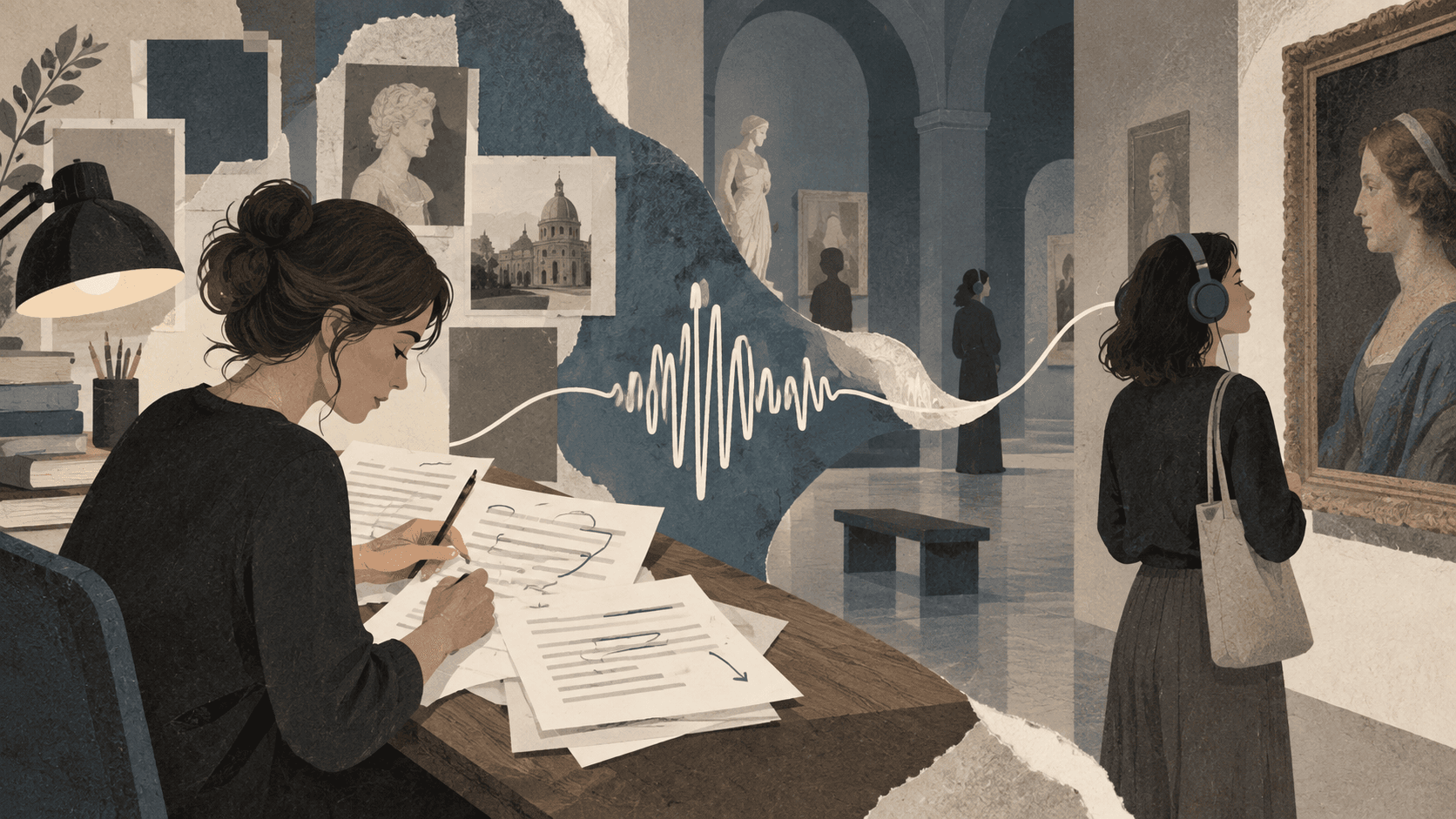
Write to one person who is looking
An audioguide is intimate. The visitor may be standing a few centimeters from an object while a voice speaks directly into one ear. Write for that situation—not for a catalogue page or lecture hall.
Imagine an interested visitor with no specialist vocabulary. You do not need to remove complexity; you need to give it an inviting path.
Open with something present
Begin by directing attention: “Look at the small red mark near the lower edge.” A visual anchor reassures visitors that they are at the right object and creates an immediate relationship between listening and looking. Then explain why that detail matters.
- Use active verbs and concrete nouns
- Introduce names only when the listener needs them
- Explain specialist terms immediately
- Prefer one memorable idea to five dates
Give the track a shape
A useful structure is orientation, discovery, meaning, and return. First locate the visitor. Then reveal a detail or story. Connect it to the larger exhibition idea. Finally, return attention to the object or invite the visitor onward.
Transitions matter because listeners cannot see paragraph breaks. Phrases such as “Now look to the left” or “There is another reason” make the structure audible.
Time it aloud
Word counts are only estimates. Performance pace, pauses, names, and descriptive passages change the duration. Read the draft at a calm, natural speed while looking at the object. Cut anything that competes with observation rather than supporting it.
Let different voices belong
Not every track needs the same institutional narrator. Artists, conservators, local residents, researchers, and witnesses can add texture and authority. Introduce each voice clearly and keep recording quality consistent enough that visitors do not need to adjust volume between tracks.
Edit after listening in place
The final edit should happen in the exhibition. Background sound, sight lines, walking distance, and the emotional sequence of nearby works may change what the script needs. A sentence that sounds elegant at a desk may feel too dense in the room.